Organizer: KeLiang: https://www.keliangtek.com/
Submit Now:https://www.zmeeting.org/submission/icpst2027 and choose workshop
As global energy develops towards the direction of green and low carbon, the construction of new-type power systems is being actively accelerated. Along with high-proportioned renewable energy sources access to power grids and the wide application of power electronic converters, there are many problems appearing in new-type power systems, such as low inertia, wideband oscillations and voltage & frequency instability. Meanwhile, it also confronts various challenges like supply security, renewable energy consumption, system stability, multivariate load resilience, and system cost efficiency. Thus, the research needs for system stability analysis and control technologies of the new type of power systems have put forward new and higher requirements for modeling & simulation theories and methods of the new type of power systems.
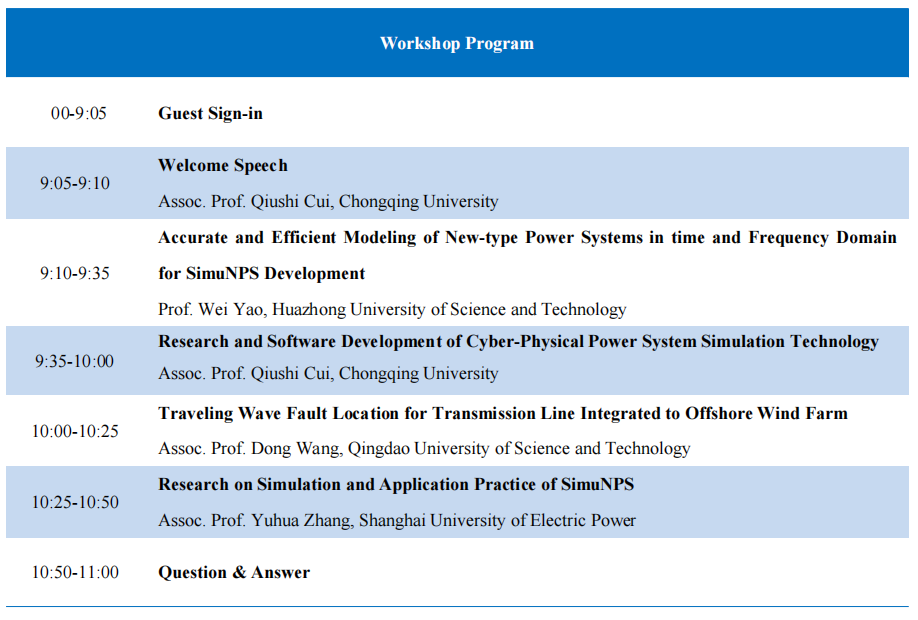
To provide a platform for attendees to discover the cutting-edge modeling and simulation technology of new-type power systems, and to exchange the latest research findings and practical insights with notable scholars and industry experts, the workshop on Modeling and Simulation Technology for New-type Power Systems will be held at Lanyang Lindun Hotel on May 16th, 2026 by Shanghai KeLiang Information Technology Co., Ltd.
We cordially invite you to attend this technical forum, jointly exploring the key challenges and innovative pathways of the new-type power system modeling & simulation technologies in both R&D and engineering applications, having knowledge of the latest scientific research achievements and engineering projects experiences, and exchanging ideas of how to accelerate safer and more stable new type of power systems.
 |
Shanghai KeLiang Information Technology Co., Ltd. (“KeLiang”) is a high-tech enterprise dedicated to providing reliable simulation & test industrial software & hardware products, system-level solutions, and consultation services to global professional users in the industries of renewable energy, electric power, new energy vehicles, etc. Headquartered in Shanghai, KeLiang has 3 branches separately located in Beijing, Xi’an and Changsha.
Since its founding, KeLiang has continuously strengthened its core technological advantages in fields of power electronics and power systems. After years of accumulation, leveraging its strong full-life cycle service capabilities in modeling simulation, software development, system integration, project implementation etc., KeLiang has formed a comprehensive R&D, production, sales, and service system for simulation & test products, and bloomed into a market-leading supplier in the industry. KeLiang also has been successively recognized as a National Key “Little Giant” SMEs, Shanghai Software Core Competitiveness Enterprises, Shanghai Municipal Enterprise Technology Center, and more.
In KeLiang, we believe that every achievement we make will help to shape a better world. Every project, from design to completion, is not only the fulfillment of a system or ground-breaking ideas, but also our slight contribution to create a greener and smarter future! |
- Invited Speakers of the Workshop

Prof. Xiong Du
Chongqing University, China
Speech Title: Analysis and Mitigation of Wideband Oscillation Issues in New Power Systems
Abstract: With the construction of a new power system dominated by renewable energy, China is poised to form a new energy power generation pattern characterized by large-scale power bases in the Three Northern Regions, distributed generation in the southeast, hydro-wind-solar integration in the southwest, and offshore wind power in the eastern coastal areas. However, the large-scale integration of renewable energy features strong nonlinear characteristics such as multi-timescale control and multivariate interaction. These characteristics lead to frequent incidents of harmonic distortion and wideband oscillation in new power systems, posing severe threats to the secure and stable operation of power grids.
Based on actual instability cases at home and abroad, this report focuses on exploring the sustained oscillation mechanism and mathematical modeling of new power systems, stability analysis methods under power fluctuation conditions, and corresponding stabilization control strategies. The research aims to support technological innovation and sustainable development of stability control technologies for China’s new power system.
Bio: Dr. Xiong Du is a Professor and Vice Dean at the School of Electrical Engineering, Chongqing University. He has been awarded the National Science Fund for Distinguished Young Scholars and the National Excellent Doctoral Dissertation Award. He currently serves as Vice Chairman of the China Power Supply Society. His research focuses on the stability of renewable energy grid-connected systems and the reliability of power electronic systems. His academic achievements include the First Prize of the Ministry of Education Natural Science Award, the Outstanding Young Scholar Award and the Special Science and Technology Progress Award from the China Power Supply Society, along with many other prestigious honors.
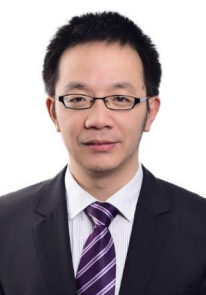
Prof. Wei Yao
Huazhong University of Science and Technology, China
Speech Title: Accurate and Efficient Modeling of
New-type Power Systems in Time and Frequency Domain for SimuNPS Development
Abstract: The large-scale wind farms of the new-type power systems
contain a large number of wind turbines, with diverse operating states, and
complex topology of the collection lines. Detailed modeling and simulation
require greatly computational quantity, making it difficult to achieve accurate
and efficient simulations. It is urgent to develop accurate and efficient
simulation models that can account for the dynamic differences among wind
turbines and the dynamics of collection lines within the wind farm.
This report utilizes the structural similarity of wind turbines to propose
vector simulation technology for wind farms, which can achieve refined
time-domain modeling of wind farms with only a small number of wind turbines and
can account for the internal dynamics of wind farms, thereby significantly
improving simulation efficiency. Additionally, the report proposes a
frequency-domain accurate modeling method for the sequence immittance of new
energy power stations, considering frequency coupling as well as AC/DC side
coupling based on harmonic linearization.
A rapid prototyping real-time
simulation technology for new-type power systems has been introduced, and an
autonomous and controllable new-type power systems dynamic simulation
experimental platform has been constructed. Furthermore, a national independent
and controllable new-type power systems modeling and simulation software
(SimuNPS) has been jointly developed with Shanghai KeLiang Information
Technology Co., Ltd., and a frequency-domain analysis toolbox (FlexFD) has been
further developed as well. From the perspective of mechanism model and data
driven, a complete solution has been provided for the wideband oscillation
problems, offering strong support for the stable operation of new-type power
systems.
Bio: Prof. Wei Yao is Head of the Department of Electric Power
Engineering at Huazhong University of Science and Technology (HUST) and a
recipient of the National Science Fund for Excellent Young Scholars. He received
his bachelor's and doctoral degrees from HUST in 2004 and 2010, respectively. He
has been a faculty member at HUST since September 2012. His research interests
include stability analysis and control of high-penetration renewable energy
AC/DC power systems.
He has led 6 National Natural Science Foundation projects(including the
Excellent Young Scholars Fund, Joint Key Program, and Key Program) and 2
projects of the National Key Research and Development Program. He has published
over 100 SCI-indexed papers as the first/corresponding author (including 3 ESI
Hot Papers and 18 Highly Cited Papers) and holds over 60 authorized invention
patents. He has received the Second Prize of National Teaching Achievement
Award, the Second Prize of National Science and Technology Progress Award (5th
place), the First Prize of Science and Technology Progress Award of the China
Electrotechnical Society, the Outstanding Science and Technology Worker of China
Electric Power, the IEEE PES (China) Outstanding Young Talent Award, and the
Innovation Figure Award of China Invention Association. He has been selected as
an Elsevier Highly Cited Chinese Researcher for three consecutive years since
2021. He serves as an editorial board member or associate editor for 12 SCI/EI
journals.
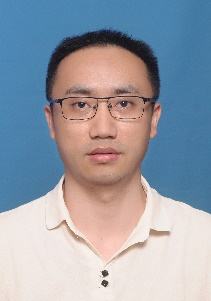
Assoc. Prof. Yang Li
Hunan University, China
Speech Title: Research and Software Development of Cyber-Physical Power System Simulation Technology
Abstract: Challenges arise in the stability evolution analysis, stability boundary assessment and early warning, and global system wide-bandwidth oscillation prevention and control for new energy power systems due to factors such as the integration of massive heterogeneous devices, strong coupling interactions within the system, and the random variability of operating states in large-scale renewable energy clusters.
Addressing these technical difficulties and incorporating our latest research progress, this report first explores a technical pathway for the evolution and prevention of wide-bandwidth oscillations in new energy power systems based on frequency-domain digital twins. It then discusses methods for system impedance modeling and stability analysis. Building on this foundation, the report discusses approaches for characterizing stability boundaries that account for dynamic parameter intervals and techniques for advanced instability warning based on state prediction. Subsequently, it discusses the assessment of system damping resources and multi-level coordinated governance technologies for global system stability. Finally, the report introduces the development practices of a frequency-domain analysis toolbox. The aim of this report is to provide a feasible solution for effectively addressing wide-bandwidth oscillation issues in large-scale new energy cluster systems, thereby contributing to enhancing renewable energy integration, ensuring secure power supply, and supporting the achievement of the dual-carbon strategic goals.
Bio: Dr.Yang
Li is an Associate Professor at the College of Electrical and Information
Engineering, Hunan University, and was selected into the Postdoctoral Innovative
Talent Support Program (Bo Xin Program). As the project leader, he has secured
funding for and presided over national and provincial/ministerial-level projects
including the Young Scientists Fund of the National Natural Science Foundation
of China, a sub-task under the National Key R&D Program of China, a project
under the Hunan Provincial Key R&D Program, and a project supported by the China
Postdoctoral Science Foundation. He has published over 20 high-quality research
papers and been granted 6 patents. His research interests include power quality
control and stability analysis of converter-based power systems.
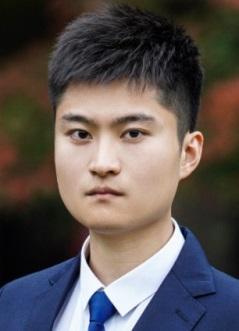
Researcher Dr. Bin Hu
Zhejiang University, China
Speech Title: Traveling Wave Fault Location for Transmission Line Integrated to Offshore Wind Farm
Abstract: Doubly-fed Induction Generator (DFIG)-based wind turbines offer advantages such as variable-speed constant-frequency operation, low cost, and no risk of demagnetization, making them one of the main turbine types in large-scale Desert-Gobi-Wasteland New Energy Base. Compared with permanent magnet synchronous generator (PMSG)-based wind turbines, the stator winding of a DFIG is connected to the grid in parallel with a back-to-back converter. Consequently, its grid-connected stability is influenced by both the rotor-side and grid-side ports, and its pronounced induction machine characteristics pose challenges in steady-state operation, transient protection, and active grid support.
To address these issues, this report focuses on key technologies for stability analysis and enhancement of grid-connected DFIG-based wind power systems. It reveals the instability mechanisms of DFIG under small and large disturbances, proposes a coordinated transient and steady-state synchronization stability enhancement strategy, and improves the near-limit support capability of DFIG-based wind power at both the turbine and farm levels. The findings provide theoretical and practical foundations for ensuring the stable operation of wind power integrated into high-penetration renewable energy power systems.
Bio: Dr.
Bin Hu, a "ZJU100 Young Professor" at the College of Electrical Engineering,
Zhejiang University, and a doctoral supervisor. He has published over 60 SCI/EI
papers, including 24 as the first author or corresponding author, with one paper
recognized as a Best Paper in the IEEE Transactions on Energy Conversion. He has
been listed on the Stanford University's List of World's Top 2% Scientists. He
has received the Outstanding Doctoral Dissertation Awards from the China Electrotechnical Society, Zhejiang Province (nominated), and Zhejiang
University. He has led projects including the National Natural Science
Foundation of China (NSFC) Youth Fund, the Special Support and General Fund from
the China Postdoctoral Science Foundation, a sub-project of the National Science
and Technology Major Project for Smart Grids, the Zhejiang Provincial Natural
Science Foundation, and an open research project of a State Key Laboratory.